Many industries or sectors of trade have a Trade Association which works for the good of their members as a collective ‘voice’. Amongst other things, this can include putting the position of its members they represent to government departments, the media and other parties. The governing body itself is usually made up of a Board drawn from its members which is, more often than not, headed up by a President.
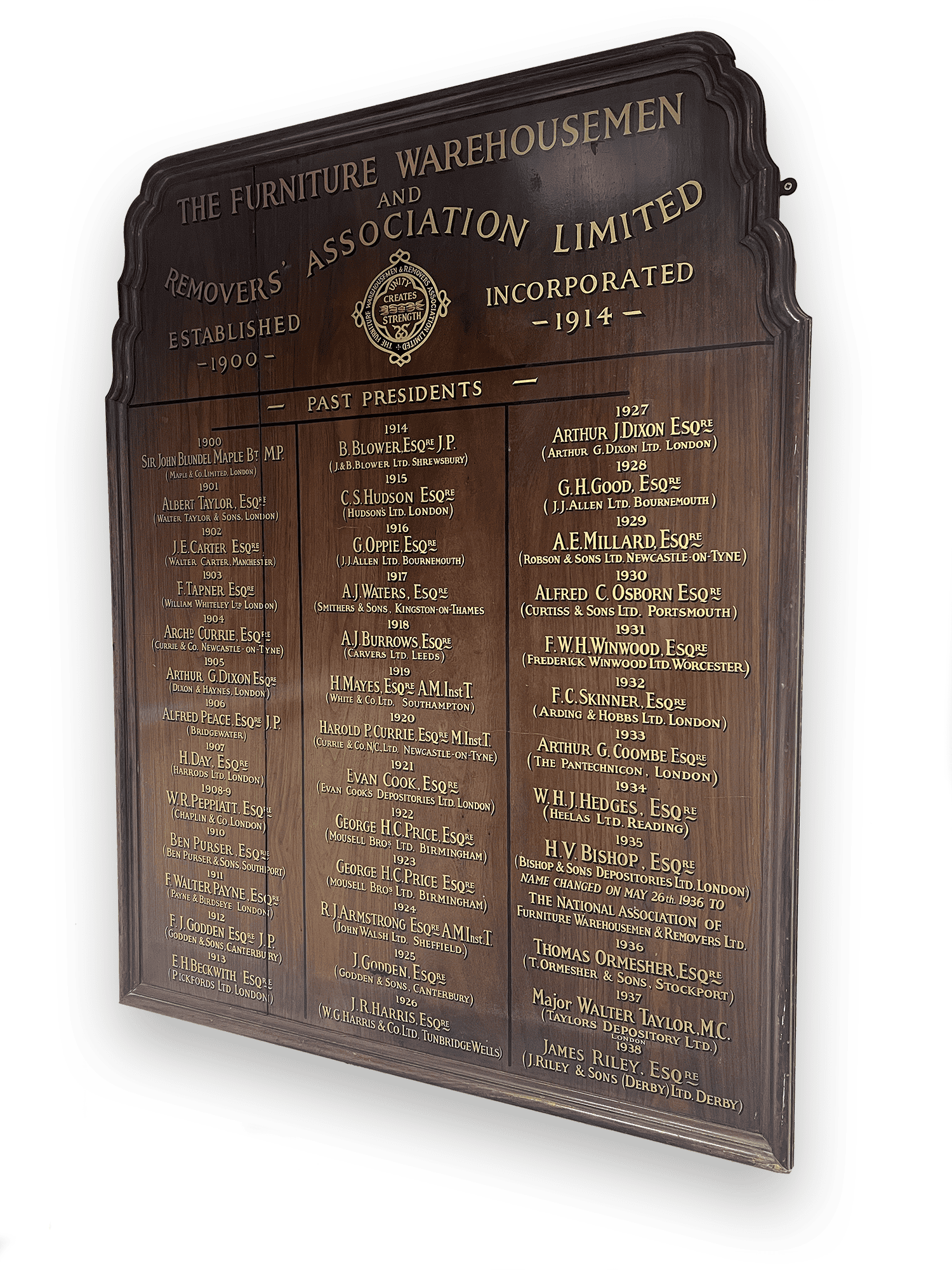
The British Association of Removers (the BAR) represents the professional removal industry in the UK and – as of February 2025 – has had 112 elected Presidents during its 125-year existence, the first of whom in 1900 was Sir John Blundell Maple 1st Baronet, of Maple & Co Ltd, London.
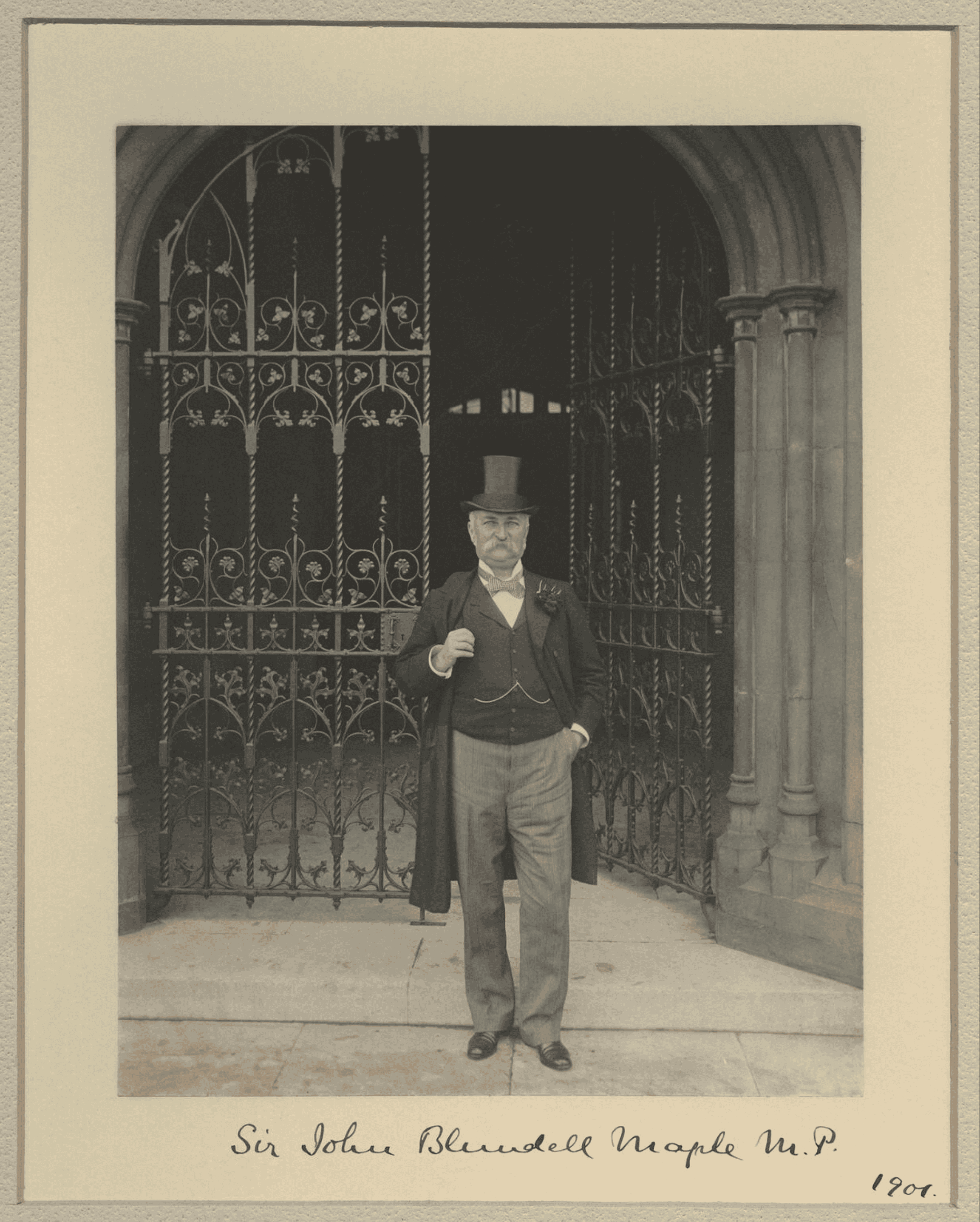
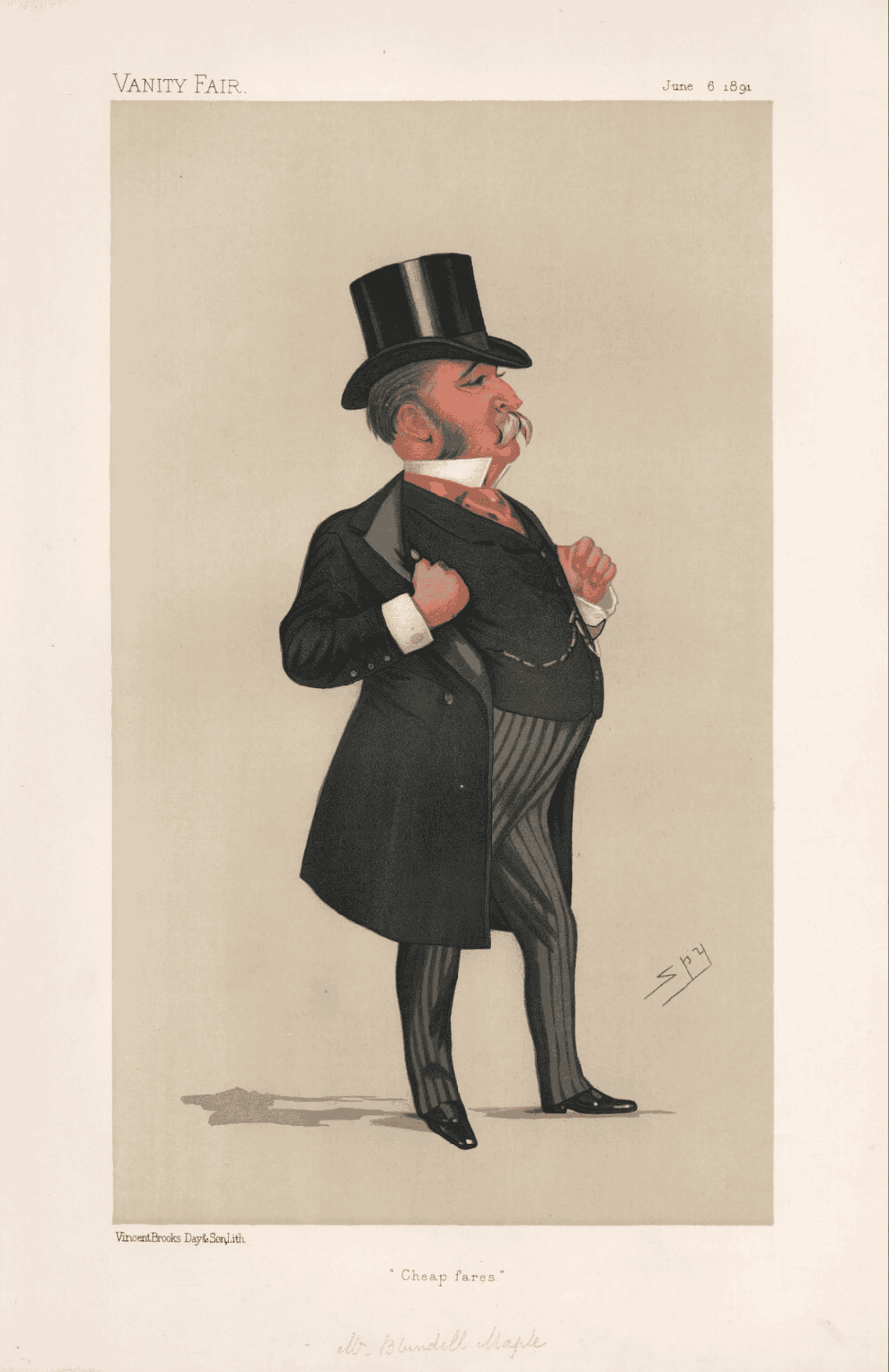
Sir John Blundell Maple, Victorian Furniture Entrepreneur
Born in 1845 in Tottenham Court Road, London, John Blundell Maple was the elder son of John and Emily Maple. In 1840 his father founded Maple and Cook (later Maple & Co after the original partnership was dissolved by mutual consent), a British furniture, cabinet and upholstery manufacturer, which found success during the Victorian and Edwardian eras. They were well known for fine quality, craftsmanship and were specialists in copying old designs but bringing them up to date to the more modern trends.
John Maple junior joined the company at 16 and was an intrinsic part of its rapid expansion, showing exceptional business skills, vision and an eye for identifying and seizing opportunities in a marketplace that was exploding with the exponential growth in hotels, and opened further geographically by the burgeoning Empire. Maple took control of the business in 1880 and by 1885 Maples was the largest furniture store on the planet, supplying furniture and interior decoration to many high-status individuals and various royal families, even furnishing Tsar Nicholas’s Winter Palace. Closer to home the company held the title of ‘Upholsterers by special appointment to her majesty Queen Victoria and later, ‘Upholsters and Decorators’ to his majesty George V. The company made the most of the awards by printing the royal crests and titles on their trade cards.
Described as a dapper, yet modest, kindly and genial man, the prosperity the business afforded him enabled Maple to enter public life via equine means, becoming a notable racehorse owner and breeder with stables in Newmarket, all of which enabled him to rub shoulders with the racing elite. Though one of his stud farms was for shire horses, better suited for pulling large loads than winning races.
Maple went into politics as the Conservative MP for Dulwich in 1887 and was knighted five years later, becoming a baronet in 1897.
First floor haberdashery, ground floor steam trains!
In 2025 a train station entrance within a retail shopping centre isn’t unusual, but it was less so in the late 19th Century. A man of great ambition and entrepreneurial spirit, Sir John also possessed an uninhibited boldness which was evident in his suggestion to the Metropolitan Railway that a ‘foot subway’ be constructed into Maples’ Tottenham Court Road store from Gower Street station (renamed Euston Square in 1909). He also sought rail connections both eastward and westward, to enable goods to be brought into and despatched from the firm’s premises.
In response the Metropolitan ascertained that Maple & Co sent out enough freight daily to fill ten railway trucks and the Board were told there would be no difficulty in providing a rail connection by making an opening in the existing tunnel and working the facility at night with the aid of a hydraulic conveyor. This was costed, along with a 100 ft passenger subway into the shop from platform level. No doubt the reason for the Railway giving such consideration to the proposal was influenced by the sheer amount of ‘chair traffic’ that was being carried by freight trains into Gower Street, which almost certainly originated from the furniture industry in High Wycombe and were destined for Maples and other furniture establishments in the area.
Sir John received a second mention in the Metropolitan Railway papers, one which indicates the influence and respect generated by this star of the ‘shopocracy’ at the time. In 1893 the board minutes reported that Sir John had lain ill for some weeks in his house at Clarence Gate, Regent’s Park, on a bed within 40 ft of the railway line, during which time he had suffered ‘Great discomfort and annoyance from the vibration of the Railway’. Despite discovering no apparent defect, the railway board decided to pack the track for 50 yards each side of the Maple residence, an operation described as ‘Requiring 300 cubic yard of ballast at seven shillings a ton’, though no mention is made of the labour and transport costs involved.
An unusual employer for the time
Unlike many of his contemporaries, as an employer Sir John recognised and rewarded the loyalty of his workers. In 1897 he funded the construction of an almshouse, and a convalescent home designed specifically to house his workers, the latter of which though now converted to flats, still stands under its original title, Akrill House in Harpenden. When in Parliament he safeguarded the interests of the shop assistants and for twelve years was the president of the Voluntary Early Closing Association. He also sponsored two bills to encourage cheaper train fares for working men, which would have also favoured the many clerks in his constituency who commuted into the city.
He was also a generous public benefactor and philanthropist, providing St Albans with the fully equipped Sisters Hospital (named after his two daughters who had died in successive years), and Clarence Park, a public park and sports ground. Furthermore, he enabled the rebuilding of University College Hospital, London.
A short life, well lived
Sir John was made the first President of The Furniture Warehousemen and Removers’ Association (the original name for what would later become the BAR). Like many of those that followed him as President at the beginning of the 20th Century, his business interests lay largely in retail and warehousing/depositories, though this often included the ‘transshipment’ and storage of a great many goods within the UK and further afield. Sir John died just aged 58 from Bright’s Disease (kidney infection) in 1903, just three years after holding the Presidency of the FW&RA and only two months after being at last admitted to the prestigious Jockey Club, membership of which he had sought for many years. At the time of his death, it is estimated that the Tottenham Court Road premises covered more than four acres and employed somewhere in the region of 3,000 people. The Daily Mail commented that Maple goods furnished “half of the palaces in Europe, and the bulk of the best modern mansions in Great Britain”. An obituary later described Sir John’s “great shrewdness and energy, and capacity for acquiring a complete mastery of all the details of the business”.